
How Does AI UI Generation Actually Work? The Computer Science Behind Prompt-to-Code
A deep technical dive into grammar-constrained decoding, Abstract Syntax Trees (ASTs), WebContainers, and the compilation pipelines powering modern AI app builders.
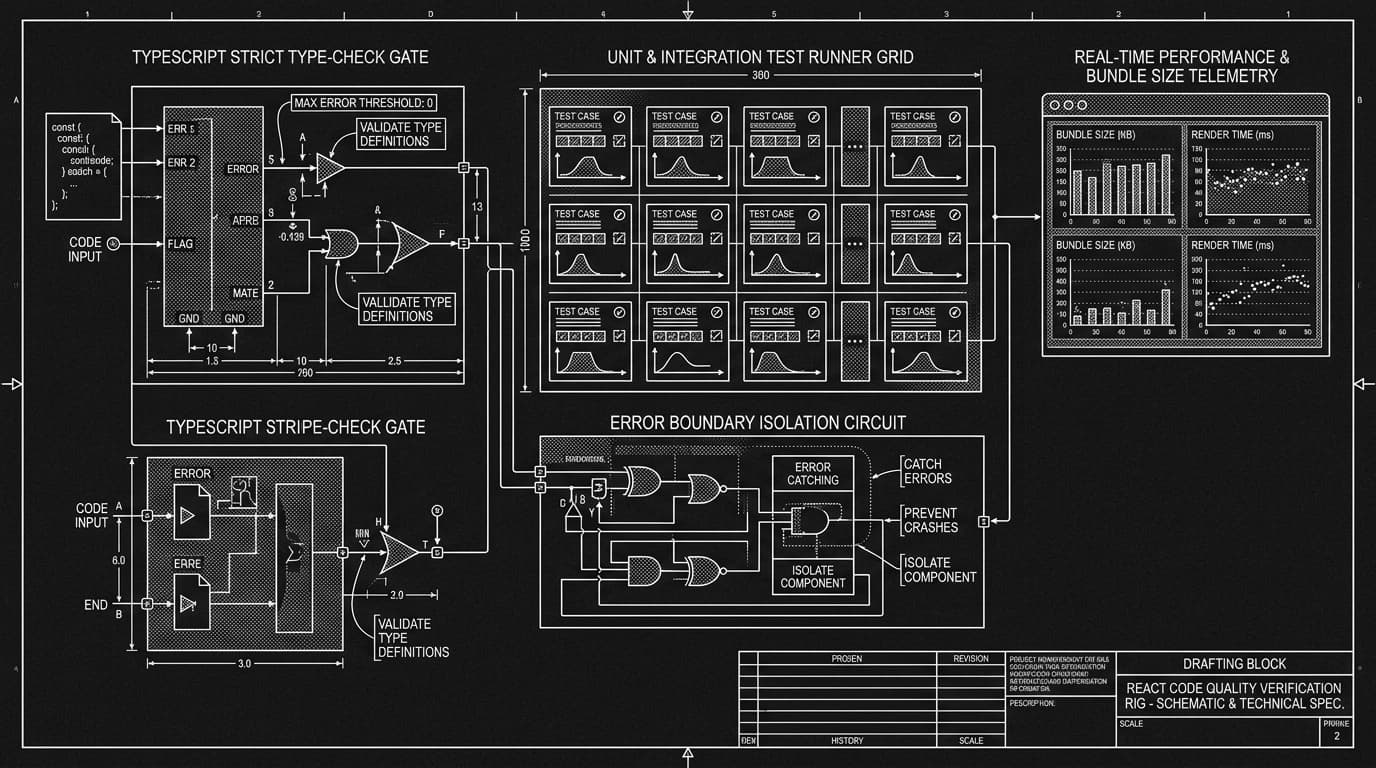
The 4 Stages of the AI Code Compilation Pipeline
When a user submits a prompt like "Build an ecommerce analytics dashboard with date filtering and a revenue chart", the platform executes a sophisticated multi-stage transformation process. Here is how modern systems convert that text into a running browser application:
Stage 1: Intent Disambiguation & Context Assembly
Raw human prompts are notoriously ambiguous. The system first passes the prompt through an intent classifier that extracts entities, user flow requirements, and domain parameters. It injects project context: existing database schemas, visual design tokens, and component library interfaces.
Stage 2: Grammar-Constrained Decoding
Standard autoregressive language models predict the next most probable token. In unconstrained generation, this often results in broken closing tags or invalid TypeScript syntax. State-of-the-art builders apply Context-Free Grammars (CFGs) during inference, masking out invalid tokens and guaranteeing that the output strictly conforms to valid TypeScript and JSX grammars.
Stage 3: Abstract Syntax Tree (AST) Transformation & Linting
Once tokens are generated, the raw code is parsed into an Abstract Syntax Tree (AST). Programmatic linters inspect the AST to ensure props match component definitions, verify that hooks follow React’s rules, and check that all imported modules exist in the project tree.
Stage 4: In-Browser WebContainer Compilation & Mounting
Finally, the files are passed into a WebContainer runtime—a virtualized Node.js environment executing inside a browser WebWorker. A lightweight bundler (such as Vite) compiles the TypeScript modules, processes Tailwind utility classes, and mounts the Virtual DOM in sub-120 milliseconds.
Simplified Mental Model: The Synthesis Pipeline
[User Natural Language Prompt]
         │
         ▼
[Stage 1: Intent Parsing & Context Injection] ──► (Injects Schemas, Personas, Tokens)
         │
         ▼
[Stage 2: Grammar-Constrained Inference]      ──► (Guarantees Valid JSX Syntax)
         │
         ▼
[Stage 3: AST Transformation & Type Checking] ──► (Validates Props & Lint Rules)
         │
         ▼
[Stage 4: In-Browser WebContainer Execution]  ──► (Vite HMR & Virtual DOM Render)
Current Technical Limitations & Open Challenges
Despite rapid progress, prompt-to-code pipelines face genuine computer science bottlenecks: context window dilution over multi-turn edits, state management synchronization across deep component hierarchies, and the challenge of simulating live third-party network APIs without exposing sensitive credentials.
How Orbit by Forion Implements This Pipeline
Orbit by Forion uses a multi-model routing engine coupled with Design System Lock. Before emitting a single line of React code, Orbit establishes design tokens, infers visual personas, and reflects live database schemas. The result is resilient, typed code that executes in milliseconds inside browser WebContainers.
[ CROSS-REFERENCES · RELATED ENGINEERING DEEP DIVES & PLATFORM ARCHITECTURE ]
Frequently Asked Questions
- [Q]What is a WebContainer and how does it differ from a cloud VM?
- A WebContainer runs a lightweight Node.js operating system directly inside browser WebWorkers using WebAssembly, eliminating the latency and cloud hosting costs of traditional remote Docker containers.
- [Q]How do AI builders prevent code hallucinations?
- Through grammar-constrained decoding (forcing valid grammar rules), AST type checking, and deterministic compiler feedback loops that automatically feed compiler errors back to the model for correction.
- [Q]Can prompt-to-code builders generate backend APIs?
- Yes. Modern builders like Orbit generate complete Next.js Server Components, server actions, and parameter-safe SQL queries that connect directly to production databases.
Build with Orbit AI Developer Workspace
Connect live databases, generate native Expo mobile codebases, and eliminate fragmented subscriptions inside one continuous environment.